
Luxury New Build Family Home | Quarry Close, Horsham
Every home has a story, but Quarry Close is unlike any project Rightbuild has undertaken. What began as a straightforward land purchase became an opportunity to help a family recover from an ordeal that had turned their world upside down.
The dream, to transform a three-bedroom bungalow into a detached family home, soon became a nightmare. Despite extensive due diligence, Carole, Neil and their three children were left without a home and close to £350,000 out of pocket. A conversation about purchasing the plot evolved into something far more meaningful, as Toby and the Rightbuild team worked with the family to transform the “disaster zone” into the beautiful home it is today.
Neil and Carole have always called Horsham home, where they raised their three children, two at university and one still living at home. With Neil already retired and Carole planning to follow, they had been looking forward to a new chapter together, one marked instead by uncertainty, financial pressure and deep personal stress.
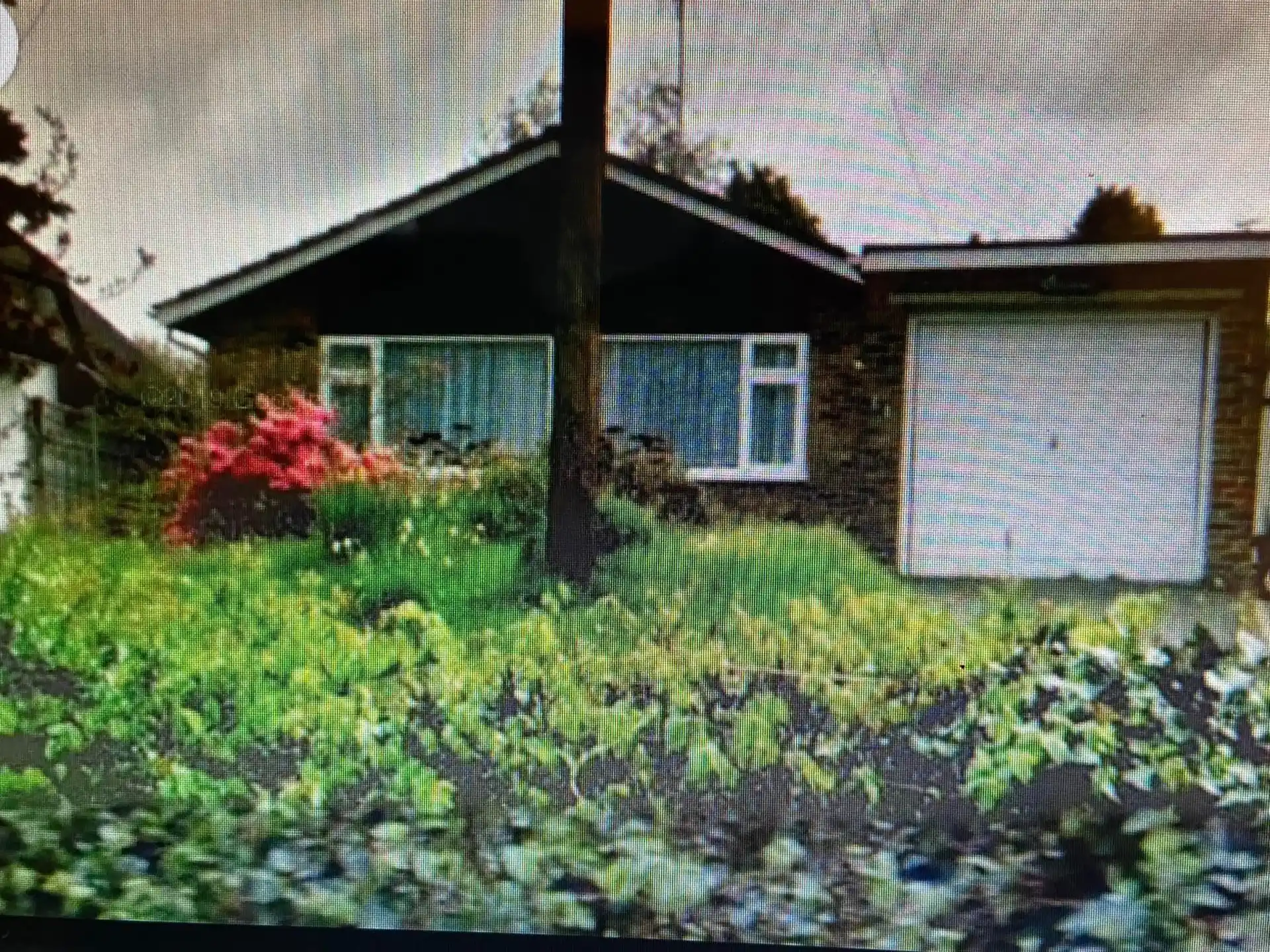
Following the sad loss of their parents, Carole and Neil inherited a detached three-bedroom bungalow in North Horsham. Rather than selling it, they decided to create something lasting for future generations, transforming the dated bungalow into a spacious family home. To fund the project, they sold their existing home and moved into rented accommodation while construction took place.
Understanding this would be one of the biggest financial investments of their lives, Carole and Neil approached the project responsibly, carrying out extensive due diligence before appointing a builder.
This included researching local companies on a well-known referral website, reading reviews, visiting completed projects, speaking with previous clients, obtaining planning permission, arranging insurance and reviewing quotations carefully. The builder they appointed had been recommended through the platform and appeared to have the experience and credibility needed. At the time, they believed they had taken every precaution.
The approved scheme involved extending the bungalow with a substantial side extension and loft conversion. Work commenced and the family looked forward to seeing their dream home take shape. It quickly became apparent that something wasn’t right. The builder requested an initial payment upfront, not unusual with smaller companies or sole traders, but also began requesting additional payments far earlier than expected. Believing these were normal cash flow requirements for a large construction project, Carole and Neil continued paying in good faith.
As the project progressed, payment requests became increasingly frequent, often linked to settling subcontractor or supplier invoices rather than agreed construction stages, and progress slowed as work became dependent on further funds being transferred.
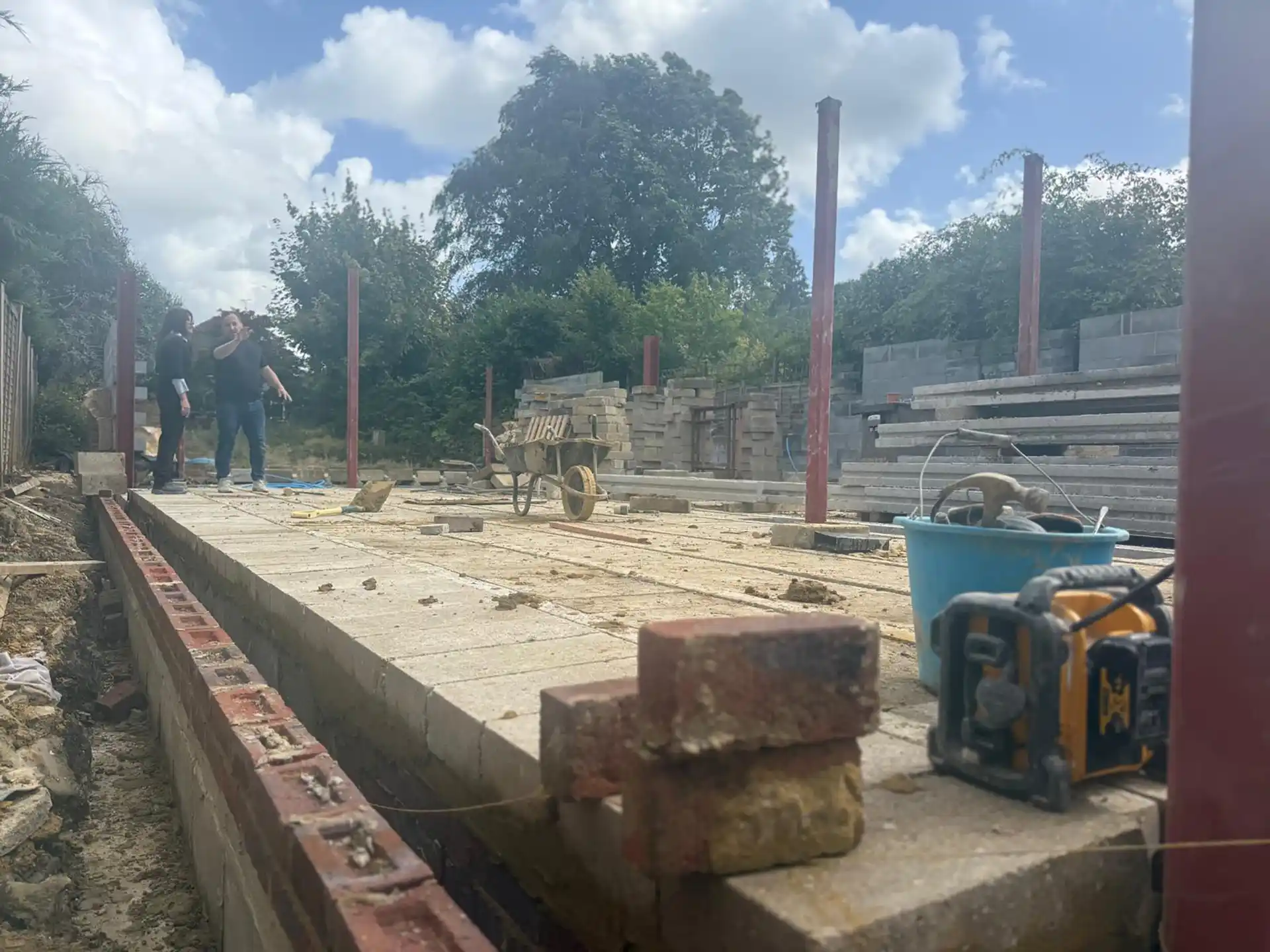
Without Carole and Neil’s approval, the original bungalow was then demolished. What had been intended as an extension project instantly became something entirely different, reduced to little more than foundations. The site became what Carole later described as a “disaster zone,” and eventually the builder disappeared from the project altogether.
Throughout the project, Carole and Neil believed they had protected themselves, following the advice typically given to homeowners embarking on major building works. Yet when everything went wrong and they reached out for help, they discovered those protections were far more limited than expected, and recovering their losses proved almost impossible.
Looking back, this was not necessarily a rogue trader deliberately setting out to deceive clients, but a business suffering from fundamental financial and operational failings, lacking the commercial structure and controls needed to deliver projects of this size. Without effective budgeting or reserves, it appeared to rely on new
customer payments to fund labour and supplier costs from previous projects, leaving clients, suppliers and the business itself financially exposed.
With no home to return to, they rented accommodation for approximately eighteen months at around £1,500 per month, alongside ongoing storage costs for their possessions. Beyond the financial burden came the emotional impact of a dream to honour their parents’ legacy becoming an exhausting legal, financial and personal ordeal.
Eventually, after exploring every realistic option, the family accepted they could no longer continue. Emotionally exhausted and financially depleted, they decided their only option was to sell the plot, approaching several estate agents in Horsham.
During conversations with one, Carole and Neil were introduced to Toby, Managing Director of Rightbuild. Discussions initially centred around purchasing the plot, but as Toby learned the full story, another possibility emerged, and rather than giving up on the dream, could the project be rescued?
Together they explored what would be required to create a completely new home on the site and whether it could be achieved financially, a conversation that became the beginning of an entirely new chapter, one that would ultimately transform the demolished bungalow into the forever home Carole and Neil had dreamed of from the start.
To design and construct a new four-bedroom detached house, with a detailed assessment of the site and its existing condition, followed by a comprehensive project plan, architectural drawings and costings.
Planning Permission: Understanding what had previously been done and making the site safe was one of the biggest challenges. Before starting, Carole and Neil had to apply for a second round of planning permission for a new build.
Health and Safety: The site was a health and safety concern, with exposed electrical cables, debris and no fencing, a danger to the team and the public. A full site survey was carried out, and sections of the existing construction stripped back to assess the ground and foundations.
Building Regulations: The investigation revealed the previous work had never been signed off by Building Control, and the foundations were inadequate, too shallow and, in places, incorrectly positioned. Sections of the floor had to be removed and rebuilt to the required depth, and a different set of building regulations applied, covering insulation, fire safety, drainage and water.
Additional Costs: As a new build, the project became liable for a £57,000 Community Infrastructure Levy, without which Neil and Carole could not secure a mortgage.
Rebuilding Trust: Beyond the technical challenges, our greatest task was rebuilding Carole and Neil’s trust, explaining that much of the previous builder’s work needed correcting while reassuring them that everything would be put right.
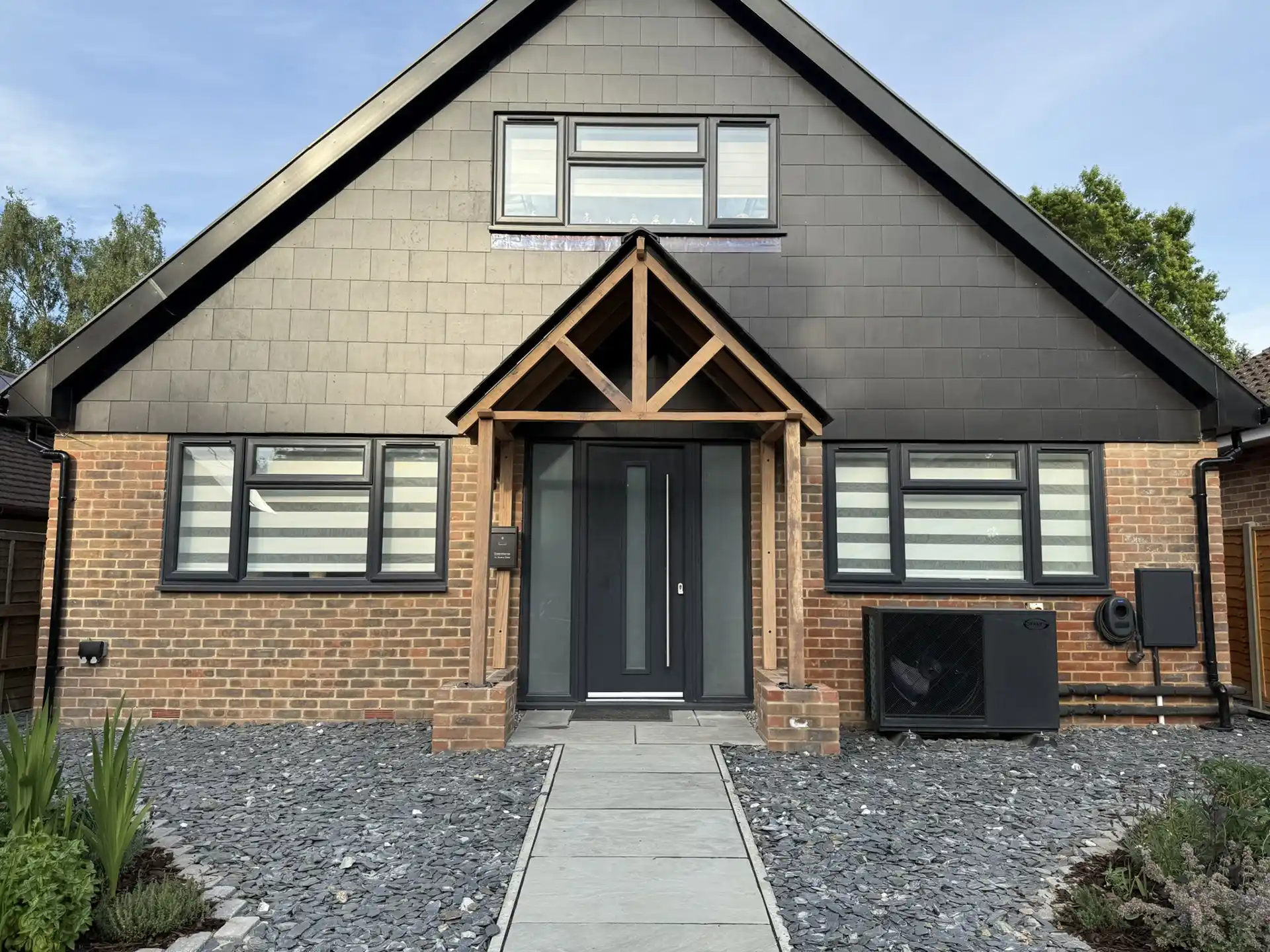
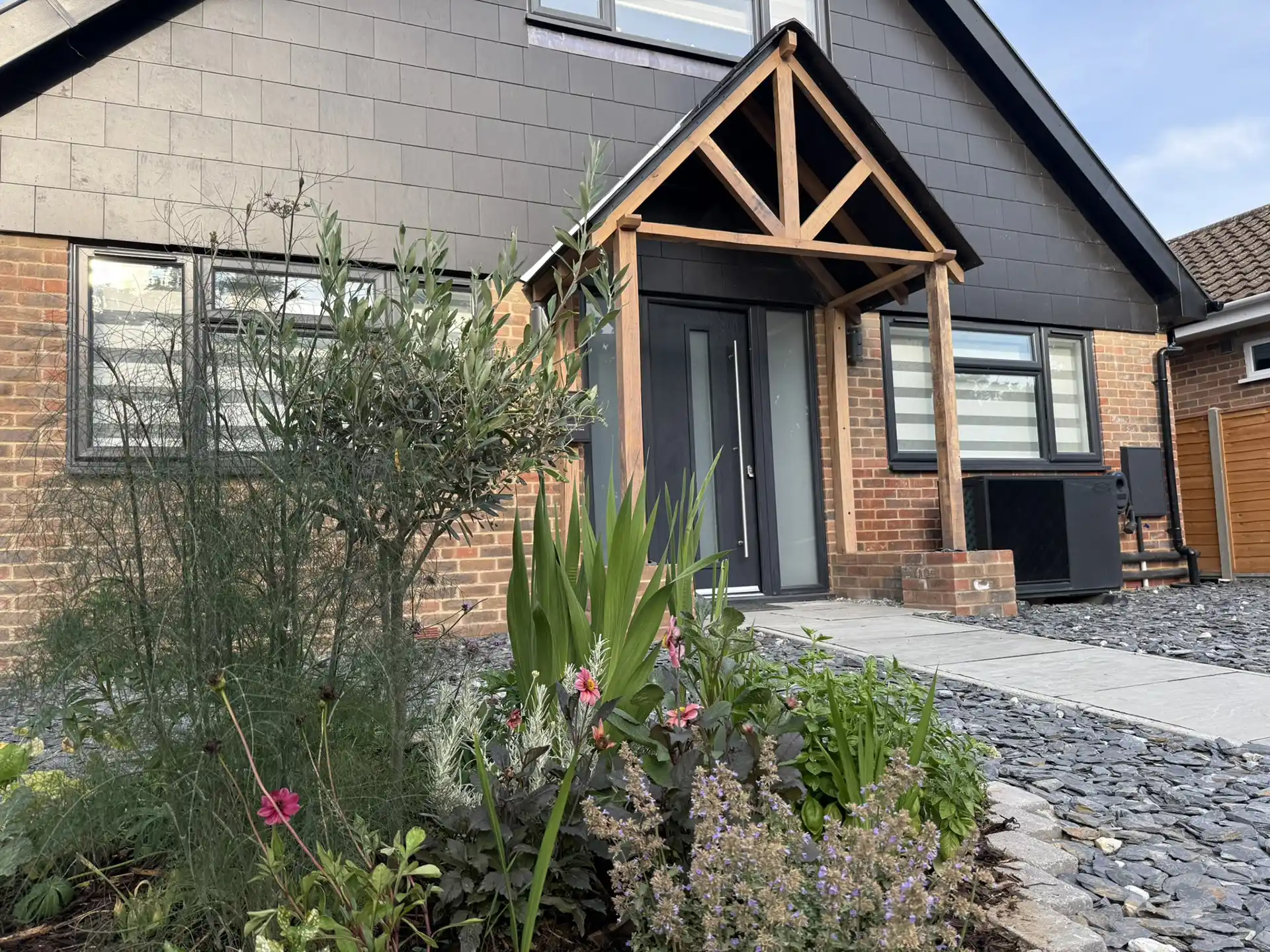
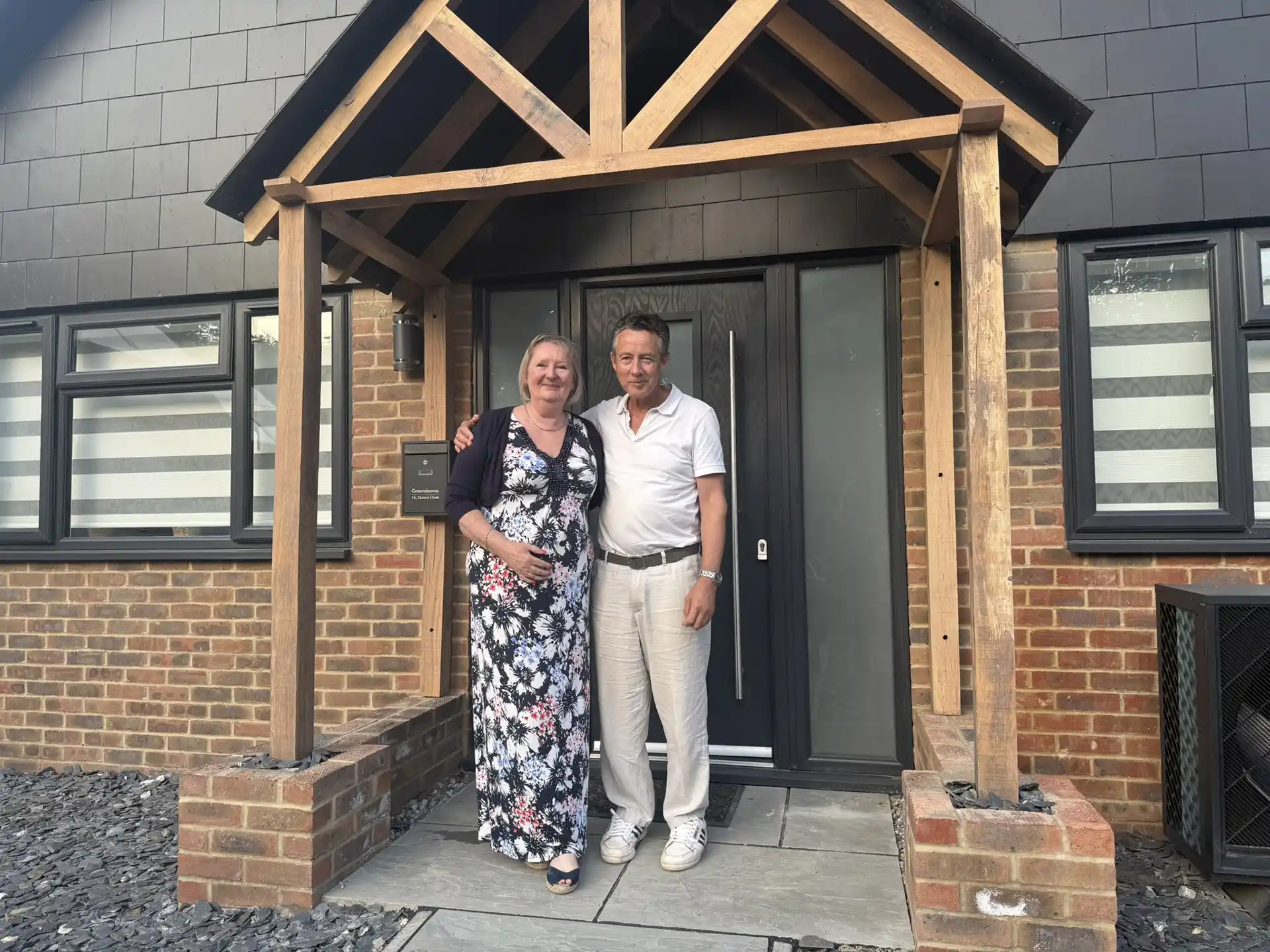



A plot that once stood as a warning to anyone considering a difficult build, Quarry Close now stands as a beautiful modern four bedroom detached home. The brief for the main living area called for a modern industrial feel, and the kitchen delivers it in full, with a polished concrete floor underfoot, warmed by underfloor heating, and a cooker hob paired with an integrated downdraft extraction system that draws steam and smells away rather than up.
Sustainability was central to this build. The home is heated entirely by an air source heat pump, feeding the underfloor heating and a 300 litre hot water cylinder, with no reliance on gas. It achieved a SAP energy rating of 83 (B) and an environmental impact rating of 96 (A), with rainwater harvesting and triple glazed rooflights helping keep bills down. The team worked closely with the couple to shape a home that felt personal to them and restored the sense of home they had lost.





“I would always advise anyone starting a building project to meet the builder at their offices and meet the wider team, from administration and project managers through to the directors. Get a feel for the people they employ, see some of their existing projects if possible, and speak to previous clients about their experience. Look at the quality of the finished work, check the accreditations the company holds, and ask for copies of their insurance policies.”
“It’s important to know the company is financially stable and has the business acumen and infrastructure to manage a project from start to finish. A contractor should not have to rely on the next client to fund the previous project’s supplier debt. Everyone within the business should represent the same values, whether it is a small job or a much larger project, and the end goal should never change, which is why our company motto is ‘Building Your Future’. Quarry Close is our proof of this. We say what we do, and we do what we say.”